Preservación forestal para el secuestro de carbono
Comunidad San Bernardino de Milpillas Chico
 Compensación
Descripción
Short description
This 100-year Improved Forest Management (IFM) Removal carbon offset project follows the Climate Action Reserve (CAR) protocol, enhancing carbon sequestration and ecosystem resilience through sustainable forestry. Covering 153,065 hectares (378,308 acres), with 73,466 hectares (181,575 acres) actively managed, the land is FSC certified and home to pine and oak forests. Led by the Indigenous Tepehuano community, Au Dam—which means "Man of the Mountains"—the land is communally owned by 1,148 people and supports 6,000 inhabitants. The community is a national benchmark for sustainable forest management. The property includes Cerro Gordo, Durango’s highest peak at 3,430 meters (11,253 feet). Considered sacred, it is the "father of all" and the source of the most important regional rivers. Indigenous belief holds that it is home to "the chief, the one who makes it rain." It also serves as a pilgrimage site for the Wixárika, Náayeri, Tepehuano (O’dam and Au’dam), and Mexikan peoples.
Long description
General Information
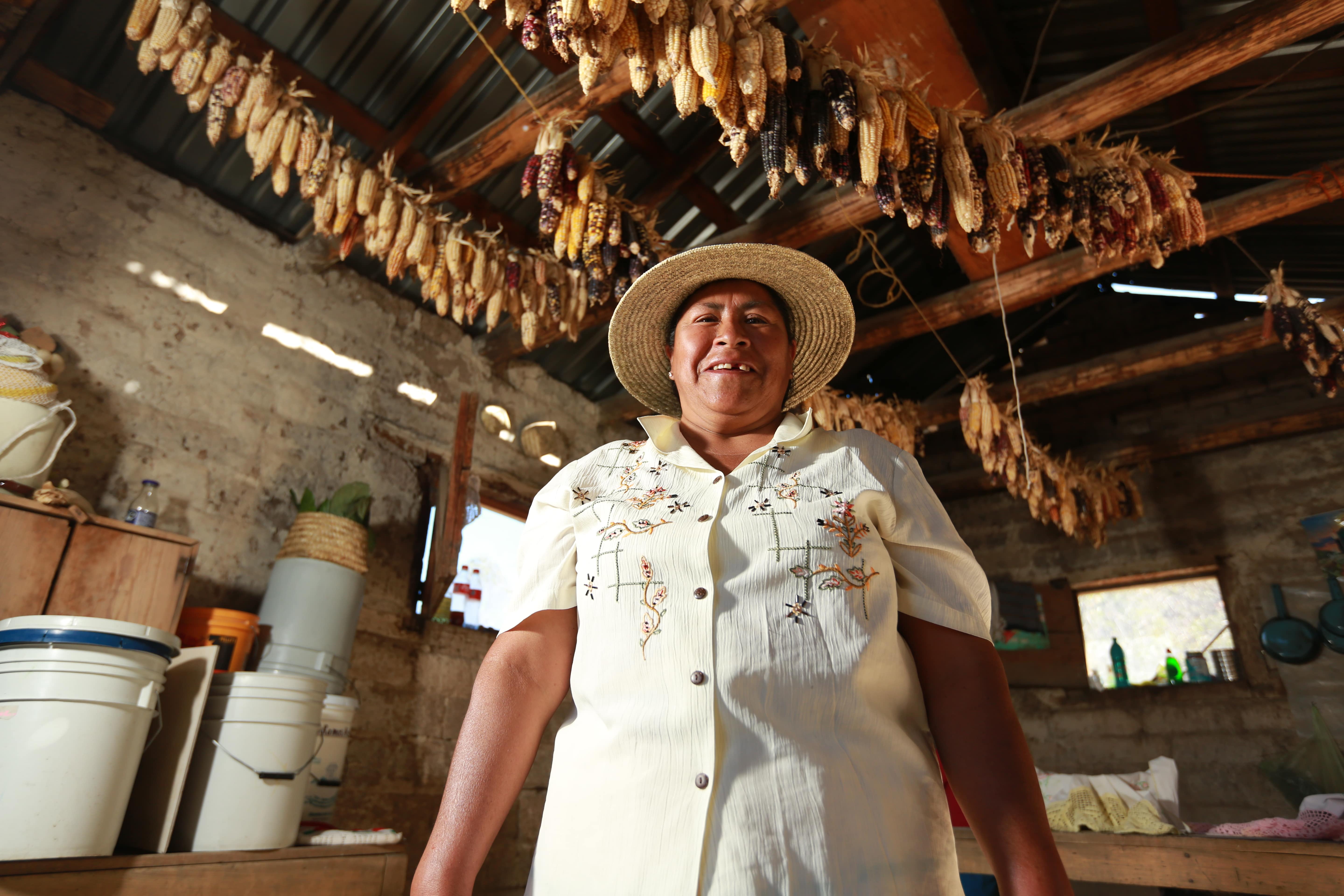
The San Bernardino de Milpillas Chico Tepehuano community, known as Au Dam, is located in Pueblo Nuevo, Durango, Mexico. With a history dating back to 1606 as a Franciscan mission, the community was officially recognized on January 1, 1961, covering 153,065.87 hectares. Traditionally, the land has been managed through timber extraction and reforestation, but threats like illegal logging, wildfires, and pests require more sustainable solutions. The project integrates carbon sequestration efforts with economic and social development to enhance both environmental conservation and community well-being.
Video
Project Location & Employment Impact
Situated in the Sierra Madre Occidental, "Durango – La Flor," Durango, Mexico. The communal property is home to 1,420 native families across 13 villages, totaling 6,000 inhabitants. Currently, the project provides 400 jobs in forestry services, sustainable production, and local businesses such as furniture manufacturing, timber extraction, a hardware store, a trout farm, and an ecotourism center.
With additional funding, the project aims to expand job opportunities, integrating more residents into conservation efforts and economic activities. By supporting this initiative, we can grow employment, strengthen the local economy, and ensure long-term environmental protection.
Additionality
Co-Benefits
Climate Co-Benefits
The project enhances ecosystem resilience by improving soil health and water quality, monitored through soil and water sampling:
- Soil fertility: Increased carbon storage through organic matter analysis.
- Water availability: Improved watershed health through pH, turbidity, and oxygen level assessments.
Biodiversity Co-Benefits
Located within the Madrean Pine-Oak Woodlands hotspot, the project protects 23 at-risk species under NOM-059-SEMARNAT-2010 (Mexican official standard for wildlife risk categories), including:
- Fauna: Jaguar (Panthera onca), Puma (Puma concolor), Ocelot (Leopardus pardalis), Margay (Leopardus wiedii), Jaguarundi (Herpailurus yagouaroundi), Bobcat (Lynx rufus).
- Flora: White Cedar (Cupressus lusitanica), Old Man’s Head Cactus (Cephalocereus senilis).
Social Co-Benefits
The project integrates socioeconomic development with conservation by:
- Creating jobs, offering opportunities for the 6000 inhabitants
- Empowering women by ensuring equal participation in forestry services and sustainable production.
- Improving local infrastructure, healthcare, and education.
Forest Conservation & Sustainable Management
- Preventing illegal logging and unauthorized land-use regulations.
- Implementing wildfire prevention and pest control measures.
- Supporting reforestation and natural regeneration efforts.
- Conducting silvicultural treatments to improve forest health. Improving roads, health centers, schools, and public services.
Permanence for 100 year project
Short-Term Plans: (Day 1- 5 Years)
- Increase community participation in conservation starting from the first year of the project.
- Enhance monitoring technologies and methodologies.
- Begin immediate reforestation and forest protection activities.
Explanation of Additionalities: Milpillas Project Structure and Its Impact on the SDGs first issuance:
The total investment is distributed as follows:
- Project Staff: 4.99%
- Carbon Reserves: 34.99%
- Social strengthening: 24.99%
- Forest rights strengthening: 24.99%
- Project monitoring: 9.99%
1. Project Staff - 4.99% of the total investment
SDG 1: End poverty in all its forms everywhere
- Staff salaries and wages: (SDG 1.2: reduce poverty)
- Project coordination.
- Operational expenses.
- Taxes related to project management.
- Project dissemination and promotion.
2. Carbon Reserves - 34.99% of the total investment
SDG’s: 13 (Climate Action) & 15 (Life on Land)
- Wildfire prevention program (SDG 13.1: Strengthen capacity to climate related hazards and disasters.)
- Drought mitigation maintenance (SDG 13.1)
- Conservation and protection of natural resources (SDG 15.1: Forest conservation and restoration.)
- Reforestation initiatives (SDG 15.2: Implementation of sustainable forest management.)
- 5 Soil restoration activities (SDG 15.3: Restore land and soil.)
- Increased productivity and vegetation cover (SDG 15.3)
- Biodiversity program and species inventory (SDG 15.5 Urgent and significant action to halt the loss of biodiversity, protect and prevent the extinction of threatened species.)
- Protection of emblematic species. (SDG 15.5)
3. Social Strengthening - 24.99% of the total investment
SDG’s: 2 (Zero Hunger), 3 (Health), 4 (Education), 5 (Gender equality and women’s empowerment), 6 (Water and sanitation), 7 (Energy), & 9 (Infrastructure, Industrialization).
- Agricultural and trout farms to enhance local food security. (SDG 2.3: double productivity and income of small-scale food producers for indigenous women).
- Healthcare and medical assistance program. (SDG 3.8: Access to quality essential health-care services.)
- Construction of a community school. (SDG 4.1: ensure complete free, equitable and quality primary and secondary education.)
- Development of local projects for men, women, and youth: (SDG 5.5: Women’s participation and equal opportunities.)
- Drinking water and sanitation program (installation of pumps and equipment): (SDG 6.1: Equitable access to safe and affordable drinking water for all.)
- Solar panel installations for renewable energy access: (SDG 7.2: Renewable energy.)
- Rehabilitation of access roads: (SDG 9.1: Sustainable and resilient infrastructure.)
- Infrastructure development, including housing reconstruction. (SDG 9.4: More Sustainable infrastructure.)
4. Forest Rights Strengthening - 24.99% of the total investment
SDG: 15 (Life on Land)
- Valuation of standing forests to promote conservation (SDG 15.1: Forest conservation and restoration.)
- Enhancement of forest conditions to increase economic and ecological value (SDG 15.2: Promote sustainable management of forests and halt deforestation and increase afforestation and reforestation.)
5. Project Monitoring - 9.99% of the total investment
SDG’s: 13 (Climate Action)
- Project measurement and monitoring (SDG 13.3 Improve institutional capacity on climate change mitigation, adaptation, impact reduction and early warning.)
- Technical project report (SDG 13.3)
- Technical assistance.
- Annual monitoring report featuring 30 KPIs to evaluate project outcomes (written in english for international organizations and carbon buyers.)
Long-Term Plans: (30 - 100 years)
Maintain or increase carbon stocks over 30 years. Expand sustainable community projects. Strengthen biodiversity conservation efforts. Achieve gender equity in all project activities.
Accounting
- Annual Carbon Removal: ~210,227 tCO₂e
- Total Credits Over 30 Years: 6,306,810 CRTs
- Total Project Area: 153,065.87 ha
- Activity Area: 73,466 ha
To ensure accuracy and transparency, monitoring follows the Mexico Forest Protocol (MFP) v3.0, using:
- Remote Sensing & GIS Analysis to track forest cover changes.
- Field Surveys for biomass measurement and biodiversity assessments.
- Community Participation to engage local stakeholders.
- Annual reports published on the Climate Action Reserve platform.
Buffer Pool
A 30.86% buffer pool reserve mitigates risks, ensuring carbon sequestration permanence and project resilience. The allocation covers various risks, including:
- Financial risks (4%)
- Land-use conversion (6%)
- Over-harvesting (4%)
- Social risks (6%)
- Political risks (4%)
- Wildfire/disease (4%)
- Other catastrophic events (6%)
Leakage Prevention
Through careful planning, sustainable management, and ongoing monitoring, the project maintains a 0% leakage rate, ensuring that carbon benefits remain fully within the project area. This is achieved by preventing activity displacement through strong land-use policies, active community involvement, and economic incentives that make conservation the most viable option for local stakeholders.
Objetivos de Desarrollo Sostenible

Fin de la Pobreza
Poner fin a la pobreza en todas sus formas y en todo el mundo

Hambre Cero
Poner fin al hambre, lograr la seguridad alimentaria y la mejora de la nutrición y promover la agricultura sostenible

Salud y Bienestar
Garantizar una vida sana y promover el bienestar de todos a todas las edades

Educación de Calidad
Garantizar una educación inclusiva y equitativa de calidad y promover oportunidades de aprendizaje permanente para todos

Igualdad de Género
Lograr la igualdad de género y empoderar a todas las mujeres y las niñas
Agua Limpia y Saneamiento
Garantizar la disponibilidad y la gestión sostenible del agua y el saneamiento para todos

Energía Asequible y No Contaminante
Garantizar el acceso a una energía asequible, fiable, sostenible y moderna para todos

Industria, Innovación e Infraestructura
Construir infraestructuras resilientes, promover la industrialización inclusiva y sostenible y fomentar la innovación

Acción por el Clima
Adoptar medidas urgentes para combatir el cambio climático y sus efectos
Vida de Ecosistemas Terrestres
Proteger, restablecer y promover el uso sostenible de los ecosistemas terrestres, gestionar sosteniblemente los bosques, luchar contra la desertificación, detener e invertir la degradación de las tierras y detener la pérdida de biodiversidad
Información del proyecto
PaísMexico
CompañíaECOFOREST CO2 SAPI DE CV
Dirección CompañíaCarretera Panamericana Km 961. Poblado Jose Maria Morelos y Pavón, 34390, Durango, Durango, Mexico
Dirección Blockchain2DTWE4VIJTTO3TWZBDGP34DCJ5PJCNQ42Q3ORTQFSSFOQ6DTK7V5HH3MFQ
TipoIFM (Improve Forest Management)
MecanismoRemovals
Vintages disponibles
- 2023
57 tCO2e
23.00 EUR/tCO2e
Galería
Vídeo
Certificación
Nombre de registro630::The Reserve::The Reserve
Url del registrohttps://thereserve2.apx.com/mymodule/reg/prjView.asp?id1=1941
ValidadorProtocolo Forestal para México
EstadoRegistrado
TipoIFM (Improve Forest Management)
Primer verificadorASOCIACIÓN DE NORMALIZACIÓN Y CERTIFICACIÓN A.C.
Inicio de créditoFeb 6, 2023
Fin de créditoFeb 5, 2024
EstándarCAR Standard
Qué es un proyecto de compensación de emisiones de carbono
La compensación de carbono es el proceso de financiación de proyectos que reducen o eliminan las emisiones de gases de efecto invernadero para compensar las emisiones propias, con el fin de lograr una huella de carbono neta cero.
Cada tonelada de carbono absorbida de la atmósfera constituye un crédito de carbono o una compensación de carbono. Para asegurarse de que estos créditos son legítimos, tienen que ser aprobados por grupos independientes como Verra o Gold Standard. Estos grupos se aseguran de que el proyecto tiene realmente un impacto positivo en el medio ambiente y de que no se habría producido sin el proyecto.
Entendiendo el proyecto
Este proyecto tiene años vintage. Esto indica el año en el cual se emitieron los créditos, correspondiéndose con las toneladas de CO2 evitadas o capturadas por el proyecto en ese mismo año.
Este tipo de proyecto es IFM (Mejora de la Gestión Forestal por sus siglas en inglés). Esto implica implementar prácticas sostenibles en bosques existentes para mejorar la captura de carbono, lo cual incluye reducir la tala, los incendios forestales y adoptar técnicas de monitorización y cosecha sostenible. Los proyectos IFM pueden generar créditos de carbono al demostrar la diferencia en la absorción de carbono entre las prácticas actuales de manejo forestal y las mejoradas.
Carbon Standard. Esto significa un conjunto de reglas y criterios utilizados para medir, informar y verificar las reducciones o eliminaciones de emisiones de un proyecto o actividad específica. Los Carbon Standards son esenciales en los mercados de carbono, ya que proporcionan, a los desarrolladores de proyectos, una metodología transparente y consistente para determinar la cantidad de créditos de carbono que pueden emitirse.
Últimas transacciones
 MX
MX$ 621.30
27 tCO2e
6 oct 2026
- MX
€ 109.56
5 tCO2e
5 ago 2026
- MX
$ 21.75
1 tCO2e
3 jun 2026
- MX
$ 43.25
2 tCO2e
3 jun 2026
- MX
$ 21.78
1 tCO2e
22 may 2026
Para desarrolladores
Si eres desarrollador y
quieres compartir tu
proyecto, este es tu lugar