Energía limpia a partir de energía hidroeléctrica de montaña
GUNDER HYDRO POWER PROJECT
 Offset
Nombre del proyecto: GUNDER HYDRO POWER PROJECT
Localización: Turquía
Impacto: Compensación de emisiones de carbono y generación de energía renovable
Descripción del proyecto:
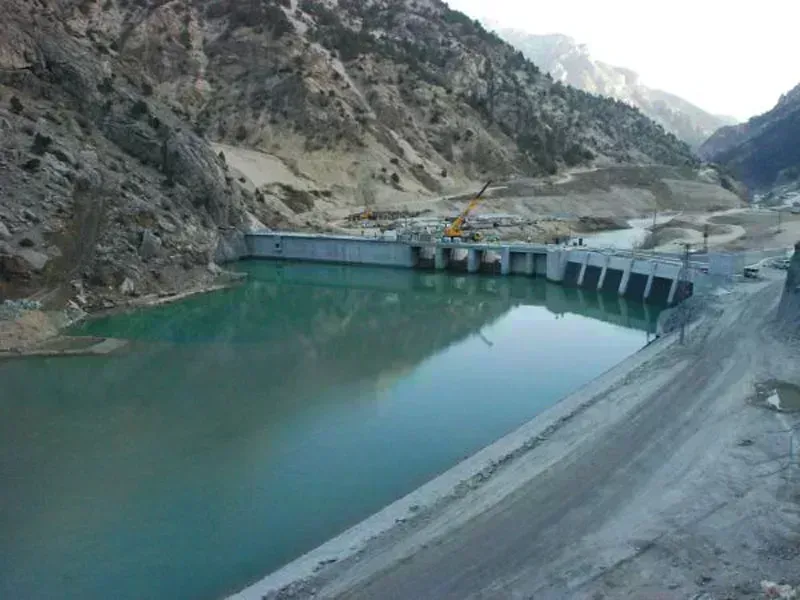
El proyecto hidroeléctrico de pasada Gunder HPP es una central hidroeléctrica de 28,22 MW situada en Turquía que suministra electricidad a más de 100.000 hogares. Este proyecto desempeña un papel crucial en la reducción de las emisiones de carbono al introducir electricidad neutra en carbono en la red turca. Al aprovechar el caudal del río, la central hidroeléctrica de Gunder beneficia notablemente al medio ambiente, con una reducción media anual de 38.760 toneladas métricas de dióxido de carbono equivalente (tCO2e), lo que equivale a retirar más de 15.000 coches de las carreteras turcas.
¿Por qué hay que apoyar este proyecto?
Producción de energía limpia: Su apoyo a la presa y central hidroeléctrica de Arkun contribuye directamente a la generación de energía hidroeléctrica, una fuente de energía renovable y respetuosa con el medio ambiente. Esto reduce la dependencia de los combustibles fósiles, mitiga el cambio climático y disminuye las emisiones de gases de efecto invernadero.
Desarrollo local y regional: Este proyecto actúa como catalizador económico, creando oportunidades de empleo, reforzando la mano de obra local y fomentando el desarrollo y la prosperidad de la comunidad.
- 2020
3.717 tCO2e
5.00 EUR/tCO2e
- 2019
45.537 tCO2e
5.00 EUR/tCO2e
- 2018
27.795 tCO2e
4.89 EUR/tCO2e
- 2017
33.557 tCO2e
4.60 EUR/tCO2e
- 2016
17.957 tCO2e
4.31 EUR/tCO2e
This project has vintage years. This means the year in which the credits were issued, corresponding to the tons of CO2 avoided or captured in that same year by the project.
This project type is Hydropower. This means initiatives that generate electricity by the flowing or falling water. The generation of carbon credits in a hydropower plant is based on the principle of avoided emissions. The project calculates the amount of CO2 emissions that would have been released if an equivalent amount of electricity were produced from fossil fuel sources instead of hydropower. The difference between the actual emissions from fossil fuel sources and the emissions avoided by using hydropower represents the carbon credits generated by the plant. This type of project also needs to cover the additionality principle meaning that a hydropower energy project needs to show that without the project, the same amount of clean energy wouldn't have been produced, and fossil fuel sources would have been used instead. If a project lacks additionality or does not replace energy from fossil fuels, it may not generate carbon credits. However, it can still be marketed as Renewable Energy Certificates (RECs), which demonstrate the use of renewable energy sources and promote their adoption.
Carbon standard. This means a set of rules and criterias used to measure, report and verify the emissions reductions or removals from a specific project or activity. Carbon standards are essential in carbon markets, as they provide a transparent and consistent methodology for determining the number of carbon credits that can be issued to project developers. The Verified Carbon Standard (VCS) Program is the world’s most widely used greenhouse gas (GHG) crediting program. Verra is a nonprofit organization that operates standards in environmental and social markets, including the world’s leading carbon crediting program, the Verified Carbon Standard (VCS) Program.
 PT
€ 854.38
157 tCO2e
27 nov 2023
 GB
£ 1359.54
250 tCO2e
23 nov 2023
 ES
€ 185.02
36 tCO2e
21 abr 2023
- ES
€ 5.50
1 tCO2e
30 mar 2023
 US
$ 5.28
1 tCO2e
8 feb 2023
For developers
If you're a developer and
you want to share your
project, this is your place